
If you are wondering how to produce better sales and increase both your ROI and revenue by integrating customer service, there is a growing trend coming from the automation of services. For instance, in the case of customer service chatbots - automated online agents to provide basic responses to customer-support requests. In this process, these agents will often be capable of understanding natural language, processing information faster than humans do, and provide higher quality answers.
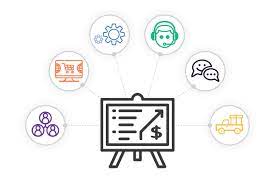
According to a study by the Aberdeen Group, nearly two-thirds of businesses operating in the U.S. do not have a sales integration strategy. Sales integration integrates leads, accounts, customers, and sales processes to create a united system that enables better decision making, increased efficiency, and increased productivity.
There are four key elements to consider when looking to integrate sales efforts: data capture, lead management, contact management, and sales process automation.
Data capture is the process of capturing relevant customer data such as demographics, interests and behaviors in order to identify prospects who may be interested in your product or service. Lead management is the process of managing all leads generated from data capture activity so that they can be reviewed for potential opportunity and pursued accordingly. Contact management is the process of tracking contact information for both buyers and sellers so that appropriate follow up actions can be taken. Sales process automation is the use of software applications or scripts to automate certain aspects of your sales process, such as lead nurturing and call routing.
When integrating sales efforts, it's important to keep these four key elements in mind in order to create a unified system that drives better decision making, increased efficiency and increased productivity.
As with any marketing function, sale integration aims to sell more. Sale integration can be a means to achieve several goals. It can increase revenue by increasing customer satisfaction and loyalty, reducing churn rates, and improving productivity through better use of technology .
It also improves sales teams' take rates, giving them a clearer view of which prospects and opportunities are best worth following up with. Work life balance is one way that integration can increase productivity by helping salespeople be more efficient in their time management at the same time as working together toward common goals and objectives. Sales momentum helps companies avoid losing patients who have been previously won over to your product or service but currently unhapp ily sitting on the sidelines. It can also encourage those who were not previously a part of your sales team but are now to upgrade so that they too get into action and extend their influence over prospective clients and customers first hand, giving you an inside view of what is going on and how people interact with your products or services year after year .
It's important to remember that sales teams based in different places may need each other equally as much as they rely on each other. And it is not an uncommon occurrence for areas with a focus to increase revenue and productivity, for example by standardising sales processes, to work in tandem with those departments focused on providing customer service or enhanced cross-selling opportunities .
A strong sales team is vital to a company's success. A successful sales integration strategy allows companies to build and maintain relationships with their customers, which can lead to more profitable customer relationships in the long run.
Sales integration is important because it helps companies to build that relationships and better understand their customer needs. Investing in a solid sales team will yield longer-term benefits because when each employee can use the skills they have acquired to support the work of others, organizations tend to improve both themselves and their customers at an exponential rate (Epple et al., 2012). By working together as one integrated unit on behalf of your respective departments, employees are not only able to provide more services for existing clients , but they are also able to identify new customers. This is how sales integration aids in revenue improvement .
Many people think that the harder they work, the more sales they will make when it comes to selling products. This is not always true. The key to achieving more sales is to remember the following three things:
1. SalesExecs are not pushy or aggressive.
Sales reps should never be pushy or aggressive when selling products. This type of behavior will only scare away potential customers and damage your relationship with them. Instead, sales reps should focus on being polite and knowledgeable about the product.
2. Don't give up on your customers.
If a customer doesn't seem interested in purchasing a product, don't give up on them. Try different sales tactics or pitches to see if there is a different way that you can sell the product to them. If not, then eventually, they will either buy the product or move on to another prospect.
3. Follow up with your customers after they have bought a product.
After a customer has bought a product from you, it is important to follow up with them to ensure that they are satisfied with their purchase and that they have any questions about the product. This will help build better relationships with your customers and result in more sales for you in the future.
4. Only post the top performing sales reps in your arsenal.
This will help improve overall performance through better customer engagement and lower churn rates of ineffective customers with who do not purchase products after a number of communication attempts.
In order to create better customer service with sales teams, it is important to be aware of some common tips. One way to improve communication is to use a chatbot. This can be done by setting up a bot for customer service and having the employees use it when they have questions about products or services. Additionally, it is important to be timely in responses to customers. If a response takes too long, the customer may feel like their issue isn't very important and may go elsewhere for service.
Sometimes it's helpful for sales reps to get bogged down with email inquiries and phone calls in order to clear their head and come back with more thoughtful responses that don't require any extra time from them. Finally, it's important not to neglect the small things that can make a big difference.
For instance, if a customer feels unwelcome or uncomfortable during their interaction with the sales team, they may not return again or recommend your product or service to others. It's important to create an environment where customers feel welcome and look forward to interacting with your team.
Creating a more logical lead process is the key to generating more sales. Making sure you're following these tips will help you create a system that works for you and your business.
1. Automate your process as much as possible. This will help you stay organized and keep track of your leads.
2. Create lead forms that are easy to fill out. This will ensure that your leads are accurate and ready to be contacted.
3. Make it easy for your customers to find out more about you and your products. This will encourgae them to contact you .
4. Customize your emails based on the person who emailed you and their needs. Create a tone that allows them to know they're in good hands with you!
1.
What does sales integration mean?
Sales integration is the process of integrating sales and marketing functions into one system. This allows sales teams to track customer interactions and insights, as well as marketing teams to track customer acquisition and engagement. In addition, sales and marketing teams can work together to create and execute marketing campaigns that are tailored to the needs of the sales team.
This integration can help to improve the flow of information between the two departments, which can lead to better decision-making and improved customer retention. Additionally, it can help to optimize marketing efforts by understanding which campaigns are successful and which ones need adjustments. Finally, sales and marketing teams can work together to identify new opportunities and target potential customers more effectively.
If you are looking to improve your sales process or integrate sales and marketing functions, then sales integration may be the perfect solution for you.
2.
What integrated sales strategy?
Integrated sales strategy is a process that combines various channels of sales to increase revenue. This can include customer acquisition through lead generation, lead nurturing, and lead conversion; market segmentation and targeting; and effective pricing and promotional strategies. By combining these channels, you will be able to increase your chances of converting leads into customers. Additionally, by understanding your customer's needs and desires, you will be able to develop unique offers and solutions that they will be more likely to take advantage of.
Integrated sales strategies should be implemented as part of a company's overall marketing plan. This way, you can ensure that your efforts are not wasted and that you are reaching the right people with the right message at the right time. By taking a comprehensive approach, you can increase your chances of success and reach your business goals.
3.
How do you integrate sales and marketing?
Integrating sales and marketing can be difficult, but it is important to do if you want to achieve success in your business. Sales and marketing are two very different departments that need to be integrated in order to maximize the effectiveness of your efforts. Sales should be working to generate leads and close deals, while marketing should be working to create a positive perception of your business and drive traffic to your website.
When sales and marketing are integrated, they can work together to create a plan that is tailored specifically to your business. This plan should include a strategy for lead generation, market research, and effective marketing methods. It is also important to keep track of your results so that you can make necessary changes and adjustments as needed. When sales and marketing are integrated, you are able to create a synergy that is powerful and transformative.
4.
What is customer integration strategy?
Customer integration strategy is a process that can be used to improve the customer experience by integrating your company's products and services into the customer's existing workflow. This can be done through customer support, marketing, sales, or any other area of your business. By effectively integrating your products and services, you can create a more seamless customer experience that leads to increased loyalty and sales.
By understanding your customer's needs, you can design a customer integration strategy that meets those needs. This will allow you to increase customer satisfaction and conversion rates. Additionally, customer integration can help you to stay ahead of the competition by offering unique and innovative products and services.
To get started, it is important to identify your customer's needs and understand how your products and services can meet those needs. Then, develop a plan for how you will integrate your products and services into the customer's workflow. Finally, execute the plan by implementing the appropriate strategies and tactics.
5.
Are there any drawbacks to using a specific kind of sales integration tool for this type of integrations?
There can be some drawbacks to using a specific kind of sales integration tool for this type of integrations. One potential issue is that the tool might be difficult to learn and use. Additionally, if the tool is not well designed, it can be difficult to manage and monitor the integrations. Additionally, it can be difficult to keep track of which sales reps are using which tool and whether or not the sales reps are meeting their targets. If the tool is not up to date, it can also impact the quality of the integrations.
In conclusion,
There are many sales integration tools that can be used for this type of integration, but some of the most popular include Zapier, Heroku, and Salesforce. Each of these platforms has its own unique capabilities and features, so it is important to choose the one that is best suited for your needs. Zapier is known for its easy-to-use interface and its extensive library of integrations, while Heroku offersBoth pricing plans and a wide range of features, such as integrations with Slack, Salesforce, and more. Salesforce is the leading CRM platform, and it offers a wide range of integrations with a variety of other applications.


