
Discover the secrets to effective sales funnel marketing in today's bear environment. Learn how marketing is more difficult for many than it is for others, due to where you are structuring your business. Schematic guide on how to start a sales funnel marketing plan step by step.
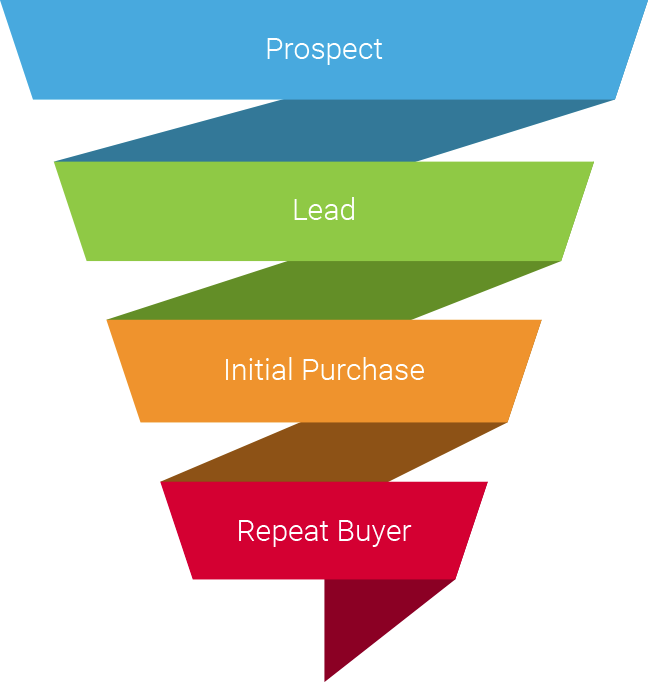
Sales funnel marketing is a model of selling that enables businesses to bind buyers to their products and services through a sequential process leading to a sale.
The five steps of the sales funnel are interest generation, getting ready to buy, buying, using the product, and getting customers’ feedback. At each stage, your business can create incentives for buyers to keep them engaged and motivated.
Sales funnel marketing helps businesses achieve higher conversion rates by preying on buyer instincts at various stages of the buying process. By understanding buyer behavior, you can organize your sales process around exploiting these impulses in the best possible way for your business.
If you want to increase your business’s sales, then funnel marketing is the way to go. Essentially, this type of marketing focuses on helping your customers progress through a series of stages in order to purchase your product or service.
1. Research your target market.
2. Develop a plan for reaching your target market.
3. Create a sales process that leads customers from research to purchase.
4. Track customer activity and make adjustments as needed.
To create a successful funnel marketing plan, keep the following tips in mind:
1. laser focus on your target market.
2. tailor your sales process to cater to your customer’s needs.
3. continuously improve your tracking and feedback systems so you can learn what works and what doesn’t work with your target market.
You've probably read that the marketing funnel is a tool used by businesses of all sizes to understand how people arrive at and interact with their products or services. But what is a marketing funnel, really, and why do you need one?
The classic marketing funnel is a visual representation of how people come to know and buy your product or service. It starts with awareness (catching your customer's attention), followed by interest (keeping your customer's attention), conversion (persuading or convincing your customer to take the next step), and finally, retention (keeping your customer coming back). In order to create a successful marketing funnel for your business, you need to understand each stage of the process and identify which steps are most important for promoting success.
Here's a look at the different stages of the marketing funnel and some tips for developing a successful plan for each stage:
· Awareness – Start by creating compelling content that helps potential customers learn about your product or service. Try out social media platforms and online articles to grow your reach and awareness.
· Interest – When someone is interested in what you have to offer, continue producing quality content that explores the benefits of using your product or service.
· Consideration – Keeping in touch with your customer after they've become interested should give you an opportunity to show them exactly why they should choose you over your competition. This is a great time to pitch that first sale or create a call center script so people aren't lost on what to do next.
If you're a business owner and you have an online presence, then you know that having a website is a key part of your marketing strategy. However, if you don't have a website, or if your website isn't working for you, then it might be time to consider creating one.
Creating a website can be expensive, but there are ways to save money on your project. One way to save money is to create your website using a free web hosting service. You can also find free domain names and web design services online.
If you want to create a custom website, then you will need to pay for a web host and domain name. Alternatively, you can use an already existing website as your lead capture page. If you use an existing website, then all you need to do is set up an account with the landing page provider and start capturing leads.
There are many different lead capture pages out there, so it's important that you choose one that is right for your business. Some common lead capture pages include sign up forms for email lists, contact form plans, and surveys.
Anyone looking to start a business knows that marketing is essential to success. But what do you do if you don't know how to create effective marketing campaigns? Or if you simply don't have the time?
One option is to use a sales funnel marketing plan. A sales funnel is a set of steps that help you convert your visitors into customers. By following a well-crafted sales funnel, you can increase your business' chances of success. Here's how to create one for your business.
1. Figure out your business' target market. The first step in creating a sales funnel marketing plan is identifying your target market. This will help you identify the needs and wants of your target audience. Once you have this information, you can begin developing your marketing strategy accordingly.
2. Plan your content marketing strategy. You need to be sure that your content is targeted at your target market and resonates with them. You should also consider creating content that solves customer problems. This will help drive traffic and conversions from interested prospects.
3.Create landing pages for lead capture. Landing pages are essential for conversion rates, so make sure yours are well designed and have targeted keywords. Learn how to do that for free on this article . Landing pages should also have eye-catching titles and compelling photographs that entice visitors to action, because every year hundreds of millions are lost due to bad visitor experience.
4. Develop a sales funnel your customers follow from step one all the way through purchase so you can target them by their interest level (see example below). Begin with an awareness stage when prospective clients or customers hear about what you provide and need a solution to their problem. They become interested in your business, so they come across your landing page where they can see emails or social media posts that mention you.
5. Once potential clients express interest (e-mail/call), stage one of the sales funnel begins as prospects are educated on solutions to their needs & wants by requesting more information from them before deciding if this is something worth pursuing further . Once educated, the prospect decides to move on to stage two where they purchase and enroll in your program.
Online marketing can be a daunting task, but it doesn’t have to be. With a well-crafted sales funnel marketing plan, you can generate targeted traffic to your website that will help your business succeed.
There are a number of elements that you will need to incorporate into your sales funnel marketing plan in order to create success. These include a strong website design, effective SEO techniques, and a compelling sales page.
You can ensure good website design by using clean and modern fonts, plenty of whitespace, and easy-to-use navigation. Use effective SEO techniques to improve the visibility of your website on search engines. Finally, put together a well-crafted sales page that focus on benefits rather than features.
By incorporating these elements into your sales funnel marketing plan, you can generate the targeted traffic your business needs to succeed.
Creating a sales funnel for your business can be a daunting task, but with the right tools and plan, it can be easy. In this post, we’re going to outline the steps you need to take to create a sales funnel for your business.
First, you need to identify your target market. You can do this by conducting market research or by using an online tool such as Google Adwords. Once you have a list of your target customers, you need to create landing pages for them. Landing pages are pages on your website that aim to lure in new customers. They should have low price points and contain information that is relevant to your target market.
Next, you need to create an email marketing campaign targeting your target market. You should start by buildinglists of addresses and then designing customized emails. You should also include CTAs (call-to-actions), which will prompt visitors to buy your product or subscribe to your newsletter.
Finally, you need to promote your sales funnel and landing pages through social media channels such as Twitter and Facebook. You should aim to build relationships with your target market and share content that is relevant to them. This will help you generate leads and convert them into customers .
FAQs
1.
What are sales funnels in marketing?
Sales funnels are a marketing strategy that helps you to convert leads into customers. They can be used to generate leads, convert leads into customers, or close customers. A sales funnel is a visual representation of the sales process that helps you to understand how leads come into contact with your sales team and how customers are converted into buyers.
There are four main types of sales funnels: cold calling, lead nurturing, email marketing, and social media marketing. Each of these types of marketing can be used to generate leads, convert leads into customers, or close customers.
Cold Calling is the process of contacting potential customers by telephone. Lead Nurturing is the process of contacting potential customers to keep them interested in your product or service, and to learn more about their needs. Email Marketing is the use of email to communicate with potential customers. Social Media Marketing is the use of social media platforms like Facebook, Twitter, and Instagram to communicate with potential and current customers.
2.
What is an example of a sales funnel?
A sales funnel is a marketing strategy that helps you to convert leads into customers. It is a five-step process that begins with creating a targeted online audience, developing a compelling offer, creating a sales process that is easy to follow, and delivering the product or service in a timely manner.
The first step is to create a targeted online audience by using search engine optimization (SEO) techniques and publishing engaging and interesting content that is relevant to your target market. The next step is to develop a compelling offer that is relevant to your target market and affordable. The final step is to create a sales process that is easy to follow and incentive-based. The delivery of the product or service should be scheduled in a way that minimizes customer friction and maximizes conversion rates.
So, what is an example of a sales funnel? Take for example a digital marketer who wants to create more leads for their business.
3.
What are the 4 stages of the sales funnel?
The four stages of the sales funnel are: Awareness, Interest, Desire, and Action.
Awareness is when your potential customer becomes aware of your product or service. This can be accomplished through marketing efforts, word-of-mouth recommendations, or your company's website.
Interest is when your potential customer becomes interested in learning more about your product or service. This could be due to the fact that they are intrigued by what you have to say, they have a need that your product or service can fulfill, or they are looking for a new solution.
Desire is when your potential customer becomes motivated to purchase your product or service. This could be due to the fact that they want to satisfy a need they have, they want to feel like they are making a wise investment, or they are simply excited about what you have to offer.
Action is when the customer makes a purchase or completes a transaction.
4.
What are the 5 stages of sales funnels?
There are five stages of a sales funnel, and each one impacts how potential customers interact with your business. The five stages are:
1. Pre-qualified: In this stage, potential customers have done some research and determined that they are interested in your product or service. They may have visited your website, read some of your content, or contacted you for more information.
2. Qualified leads: In this stage, you have determined that the customer is interested in your product or service and has provided you with their contact information. You can now start to market to them and convert them into paying customers.
3. Contacting and qualifying: In this stage, you are contacting the customer to confirm their interest in your product or service and to qualify them for a purchase. You are also trying to determine their needs and determine if they are a good fit for your product or service.
4. Pre-purchase: In this stage, your customer has decided to purchase your product or service. You have taken all of the information you collected from them and completed an order form for that customer on whichever channel is appropriate for theme.
If you have created a sales funnel marketing plan, congratulations! You are well on your way to success. However, there are a few things to keep in mind as you move forward with this plan. First and foremost, make sure that you are measuring and tracking your progress. Secondly, be sure to continuously test and adapt your plan as needed in order to reach your desired results. And finally, don’t forget to have fun with it! By following these tips, you can ensure a successful sales funnel marketing strategy for your business.


